A professionally built tennis court is far more than a flat surface with a net stretched across the middle. Whether it’s for a school, sports club, hotel, leisure centre or private home, the quality of the construction has a direct impact on player safety, performance, maintenance requirements and the lifespan of the facility.
With the right planning and experienced installation, a tennis court can provide decades of reliable use while enhancing the value of the surrounding property. This guide explains everything you need to know about tennis court construction, from choosing the right surface to understanding the installation process.
Why Professional Tennis Court Construction Matters
A tennis court is a significant investment, so it’s important to get it right from the beginning. Poor construction can lead to drainage issues, uneven surfaces, cracking, standing water and costly repairs.
Professional tennis court construction ensures:
- Consistent ball bounce
- Excellent drainage
- Safe playing conditions
- Long-lasting durability
- Lower maintenance costs
- Compliance with recognised sporting standards
Choosing an experienced contractor means every element of the project is carefully considered before work begins.
Planning Your Tennis Court
Every successful project starts with a detailed site assessment.
During the planning stage, factors such as available space, access, ground conditions and intended use are evaluated. A court designed for occasional recreational play may have different requirements from one intended for daily use by a busy sports club or school.
Other important considerations include:
- Existing drainage
- Ground levels
- Soil conditions
- Surrounding trees and vegetation
- Orientation to minimise sun glare
- Future maintenance requirements
Careful planning reduces the likelihood of unexpected costs later in the project.
Choosing the Right Tennis Court Surface
One of the biggest decisions is selecting the most suitable playing surface. Each option offers different playing characteristics, maintenance requirements and installation costs.
Porous Macadam
Porous macadam remains one of the UK’s most popular tennis court surfaces.
Benefits include:
- Excellent drainage
- Durable construction
- Low maintenance
- Suitable for clubs and schools
- Ideal base for acrylic coatings
It provides a consistent playing experience and performs well throughout the year.
Artificial Grass
Artificial grass creates a softer playing surface with excellent all-weather performance.
Advantages include:
- Comfortable underfoot
- Good drainage
- Reduced joint impact
- Attractive appearance
- Relatively straightforward maintenance
This surface is often chosen by private homeowners, hotels and recreational facilities.
Acrylic Courts
Acrylic-coated courts offer the fast, consistent playing conditions often associated with professional tennis.
Benefits include:
- True ball bounce
- Vibrant colour options
- Excellent grip
- Long lifespan
- Low ongoing maintenance
They are commonly found at sports clubs, schools and competition venues.
Polymeric Surfaces
Polymeric surfaces provide additional cushioning and are frequently used where player comfort is particularly important.
These surfaces can be an excellent choice for schools and community sports facilities that cater for players of all ages.
The Tennis Court Construction Process
Although every project is different, the construction process generally follows several key stages.
1. Site Preparation
The existing area is cleared, excavated where necessary and prepared to receive the new construction.
Accurate levels are established to ensure effective drainage throughout the finished court.
2. Groundworks and Drainage
Strong foundations are essential.
Drainage systems are installed to remove surface water quickly and prevent long-term structural problems. Proper drainage is one of the most important factors affecting the lifespan of a tennis court.
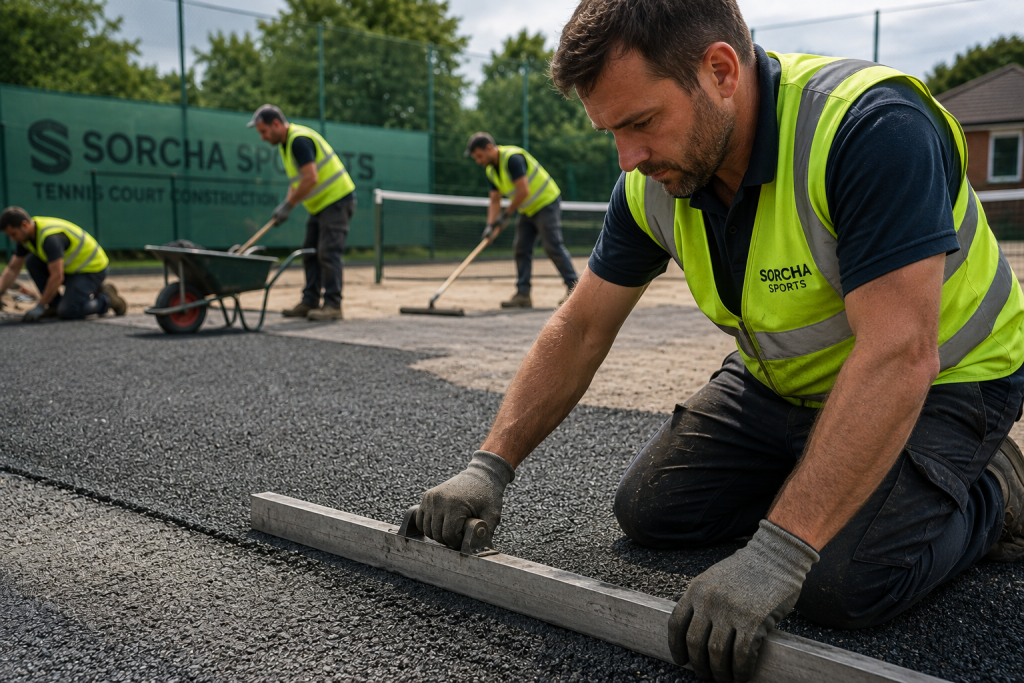
3. Base Construction
A carefully engineered sub-base provides the structural support required for the chosen surface.
This stage demands precision, as even small imperfections can affect the finished playing surface.
4. Surface Installation
Once the base has fully cured, the selected sports surface is installed.
Depending on the specification, this may include porous macadam, artificial grass, acrylic coatings or another specialist system.
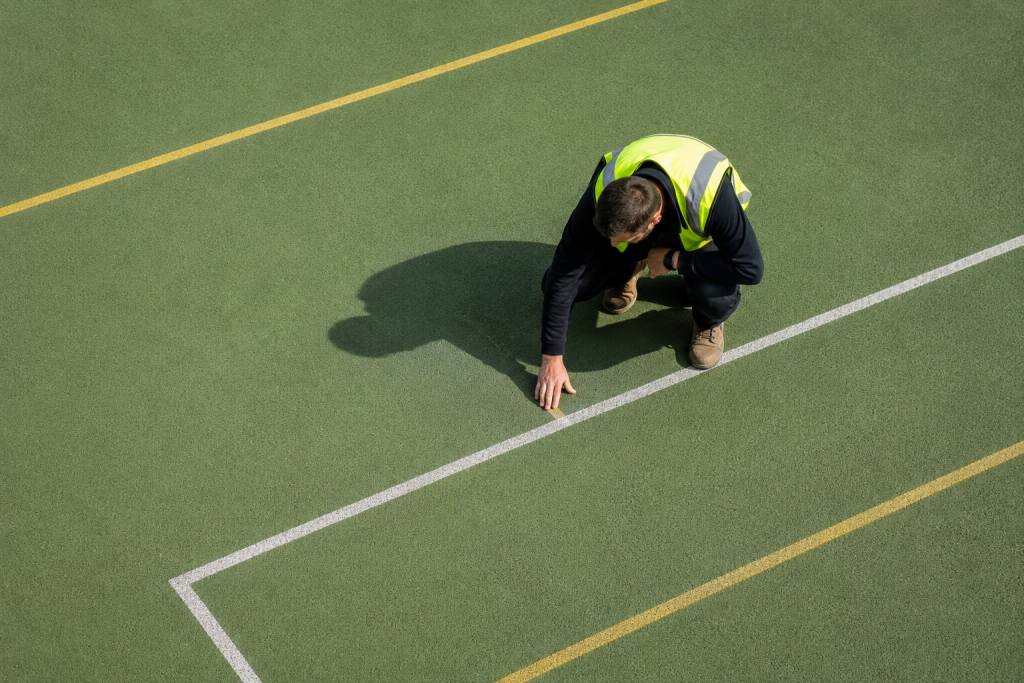
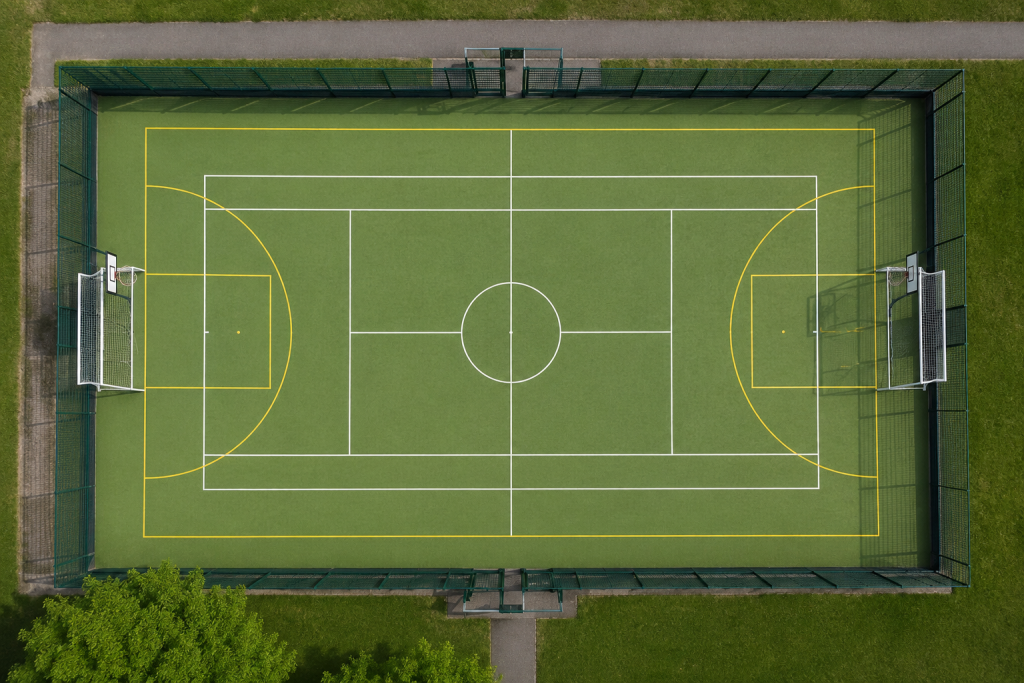
5. Line Marking
Professional line marking ensures accurate court dimensions and excellent visibility.
Precision at this stage guarantees compliance with recognised court layouts and creates a professional finish.
6. Fencing and Equipment
The final stage often includes installation of:
- Tennis nets
- Net posts
- Perimeter fencing
- Access gates
- Ball stop fencing
- Court furniture
These finishing touches complete the facility and improve both safety and usability.
Why Drainage Is So Important
Drainage is frequently overlooked, yet it plays one of the biggest roles in long-term performance.
Poor drainage can lead to:
- Standing water
- Algae and moss growth
- Premature surface deterioration
- Cracking
- Increased maintenance costs
A properly designed drainage system helps keep the court playable throughout the year while extending its lifespan.
Maintaining Your Tennis Court
Regular maintenance protects your investment and helps maintain consistent playing conditions.
Typical maintenance includes:
- Surface cleaning
- Brushing
- Moss and algae treatment
- Weed removal
- Drainage inspections
- Minor repairs
- Surface rejuvenation
Routine maintenance often prevents small issues becoming major repairs.
Refurbishment or Replacement?
Older tennis courts don’t always need complete reconstruction.
In many cases, resurfacing or refurbishment can restore performance at a lower cost.
A professional inspection will determine whether the existing foundations remain suitable or whether full reconstruction represents the better long-term investment.
Choosing the Right Tennis Court Contractor
Selecting an experienced contractor is just as important as choosing the surface itself.
Look for a company that offers:
- Extensive sports surfacing experience
- High-quality workmanship
- Complete project management
- Professional maintenance services
- Transparent quotations
- Proven track record
- Reliable customer support
An experienced contractor will guide you through every stage of the process and recommend solutions that match both your budget and intended use.
Invest in a Court Built to Last
A professionally constructed tennis court delivers years of reliable performance while providing a safe, attractive space for players of all abilities. From initial design and drainage through to surfacing, line marking and ongoing maintenance, every stage contributes to the quality of the finished facility.
Whether you’re planning a new tennis court for a school, sports club, leisure centre or private residence, working with experienced specialists ensures your investment performs for years to come. At Sorcha Sports, we provide complete tennis court construction, refurbishment and maintenance services, delivering expertly crafted facilities built for exceptional performance, durability and lasting value.